

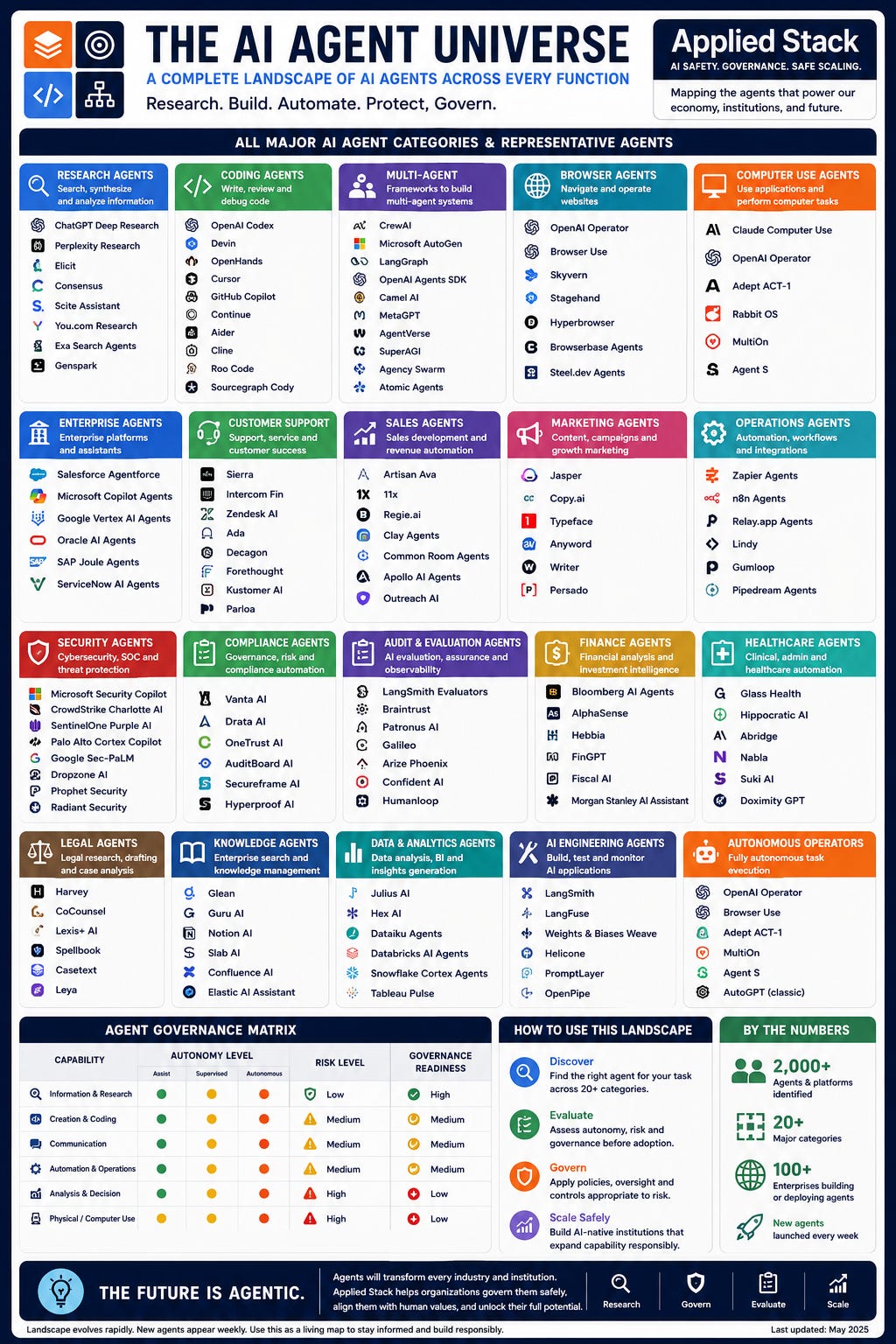
Artificial intelligence is no longer a single tool or chatbot. It has evolved into an ecosystem of specialized agents capable of researching information, writing software, operating applications, analyzing financial markets, supporting customers, automating workflows, and even executing complex multi-step business processes autonomously. What began as conversational AI is rapidly becoming a new layer of digital labor that sits alongside human workers and traditional software systems.
The scale of this transformation is difficult to overstate. According to McKinsey Global Institute, generative AI could contribute between $2.6 trillion and $4.4 trillion in annual economic value globally. Meanwhile, Goldman Sachs Research estimates that AI could impact the equivalent of 300 million full-time jobs worldwide through automation and augmentation. The emerging agent ecosystem represents the infrastructure through which much of that value will be created.
Rather than viewing AI as a single technology category, organizations increasingly need to think about AI as a workforce composed of specialized agents, each optimized for a specific function, operating within governance frameworks that ensure reliability, security, and accountability.
Research Agents: Accelerating Knowledge Discovery
Keep reading with a 7-day free trial
Subscribe to Applied Stack to keep reading this post and get 7 days of free access to the full post archives.